
Calendar
Rules That Changed
Eligibility
Get Help
COLLEGE RECRUITMENT
Playing in college starts long before senior year. Here’s what Coast FA families need to know, and when.
Your Player's Recruiting Calendar
Choose a graduating class to see every date that matters, in order. Colors show the division: NCAA Division I, II and III, NAIA and NJCAA junior college. The next upcoming date is highlighted
Timeline for the Class of 2028
Dates for this class are calculated from the rules in effect today. The NCAA updates its rules every year, so dates more than a year out can change. Coast FA re-checks this calendar each summer.
2026–27 Season Dates
Fixed dates for this school year. Outside these windows, NCAA Division I soccer is an open contact period.
| Dates | Division | What it means |
|---|
Players can contact any college coach at any time. These rules only limit when coaches can reach out first.
Not sure where your player stands? Coast FA alum Conor Sloan helps club families plan the recruiting process, from first coach email to signing day.
5 Recruiting Rules That Changed
College recruiting rules have changed a lot since 2023. Here's what many families still have wrong.
1
You need a qualifying SAT or ACT score to play
Fact: NCAA Divisions I and II dropped test scores from eligibility in January 2023. NAIA players are eligible with a 2.3 GPA and no test score. Many colleges still use test scores for admission and academic scholarships, so it's often worth taking one.
2
Register with the NCAA Eligibility Center in junior year.
Fact: The NCAA now recommends creating a free Profile Page before 9th grade. A paid Certification Account is required before a Division I official visit, and those start August 1 of 11th grade.
3
A D1 team only has 9.9 (men) or 14 (women) scholarships.
Fact: Since July 2025, Division I schools in the House settlement can fund up to 28 roster spots in men's and women's soccer. That's a maximum, not a promise. Many programs fund fewer, and roster spots are now capped at 28.
4
Players sign a National Letter of Intent.
Fact: The National Letter of Intent was retired in 2024. D1 and D2 players now sign the school's athletics aid agreement. Signing opens the second Wednesday of November of senior year, which is November 11, 2026 for the Class of 2027.
5
Every college player gets four seasons.
Fact: Division I adopted a five-year model in June 2026. Players get up to five seasons within five years, starting at age 19 or first full-time college enrollment, whichever comes first. Division II and III rules didn't change.
Register and Stay Eligible
To play NCAA Division I or II, or NAIA, a player must be cleared by that association's eligibility center. Register early. It's free to start for the NCAA, and nothing about it locks a player in.
NCAA Eligibility Center
Create a free Profile Page before 9th grade. Upgrade to a Certification Account once Division I or II schools start recruiting your player. That account is required before a D1 official visit or signing. Ask your school counselor to upload transcripts after 10th grade, after 11th grade and at graduation.
NAIA Eligibility Center (PlayNAIA)
Any player who might play NAIA registers separately, even if already registered with the NCAA. The fee for U.S. high school students is $110, and counselors can request a waiver for families who qualify.
| Academic Requirements | NCAA Division I | NCAA Division II | NAIA |
|---|---|---|---|
| Minimum GPA | 2.3 in core courses | 2.2 in core courses | 2.3 overall, or meet 2 of 3 below |
| Core courses | 16, including 10 done before 12th grade | 16 | No core-course list |
| Test score | Not required | Not required | Optional: 18 ACT or 970 SAT counts as 1 of 3 |
| Other | Courses must be on your school's NCAA-approved list | Same as D1 | Top half of class, or 2.0 GPA, count toward the 2 of 3 |
Division III schools set their own academic standards through admissions.
Test scores still matter for admission and academic scholarships. When registering for the SAT or ACT, list the NCAA (code 9999) and NAIA (code 9876) as score recipients.
SAT ·
ACT
Paying for College
Many college soccer players combine athletic aid with academic scholarships and need-based aid. Grades and the FAFSA often matter as much as the offer.
| Level | Athletic scholarships |
|---|---|
| NCAA Division I | Full and partial scholarships, including multiyear options. Schools in the House settlement can fund up to 28 roster spots |
| NCAA Division II | Partial scholarships, usually combined with academic aid |
| NCAA Division III | No athletic scholarships. Most D3 athletes receive academic or need-based aid |
| NAIA | Each school decides its aid, up to the full cost of attendance |
| NJCAA | Varies by college. Ask each program directly |
Before accepting any offer, ask
Is the scholarship multiyear or one year? What happens if my player is injured or the coach leaves? NCAA schools must tell a player in writing by July 1 if aid will be reduced or not renewed.
File the FAFSA every year
It opens the door to federal grants, state aid and many college scholarships. The 2027–28 FAFSA is open now for students starting college in fall 2027.
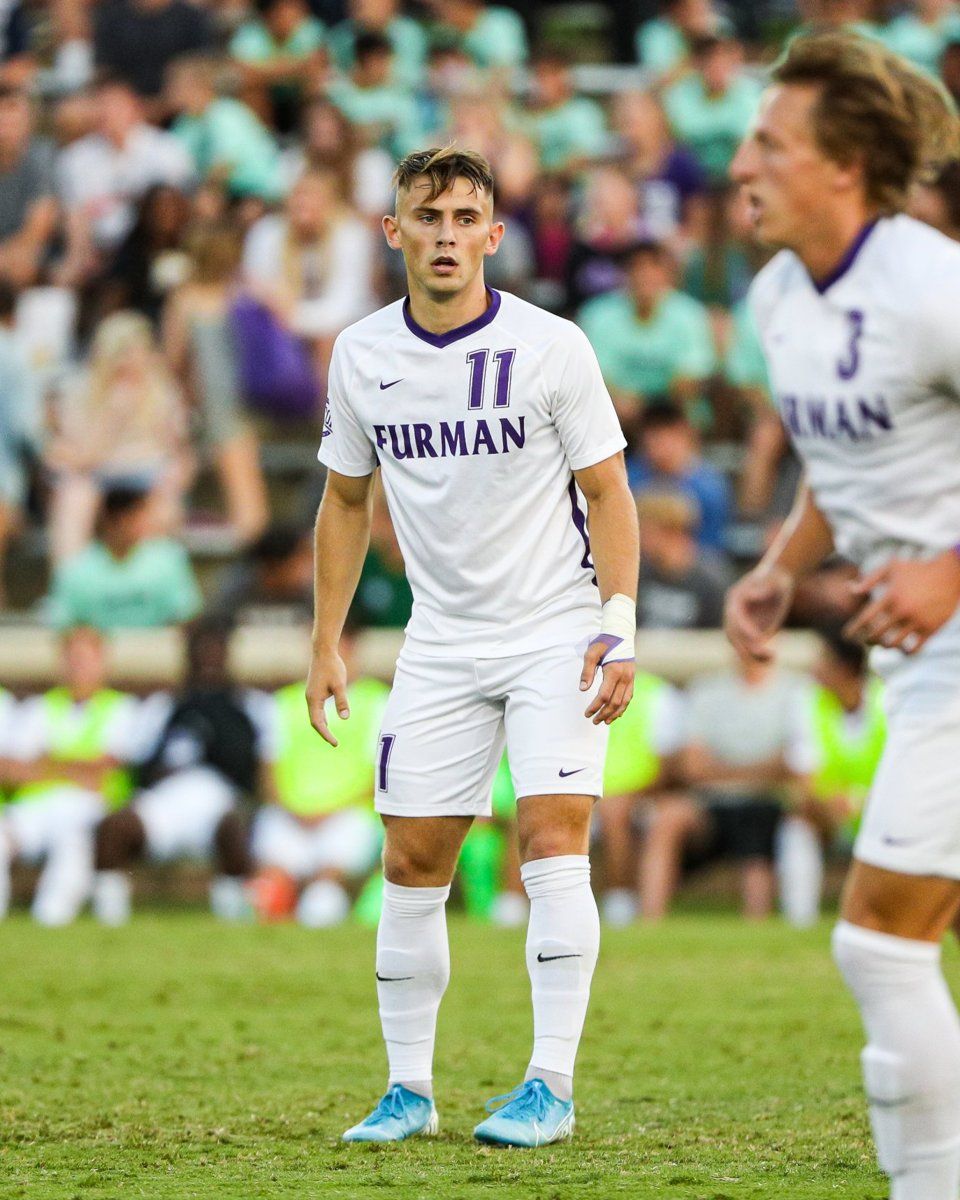
Coast FA's college recruiting partner
Get a Plan From Someone Who's Done It
Conor was part of Coast FA's first group of players. He went on to captain the Charleston Battery Academy U-18 team. In his senior year of high school, he signed an academy contract with the Charleston Battery first team, training with the pros and earning a professional appearance while keeping his college eligibility. He then chose Furman from multiple full-scholarship Division I offers and made 76 appearances over four seasons, winning a SoCon championship and earning All-SoCon honors in 2019.
Now he helps club families through the same process, with a plan built around each player.
- Know where your player fits: an honest read on level, from D1 to NAIA and junior college.
- Get in front of the right coaches: target lists, coach emails, film and showcase planning.
- Choose with confidence: the questions to ask on visits and before signing